Mahjong Solitaire Classic Game
- 4.9
- Rating
- 1.00M
- Installs
- Free
- Price

 Analysis by App-foxy
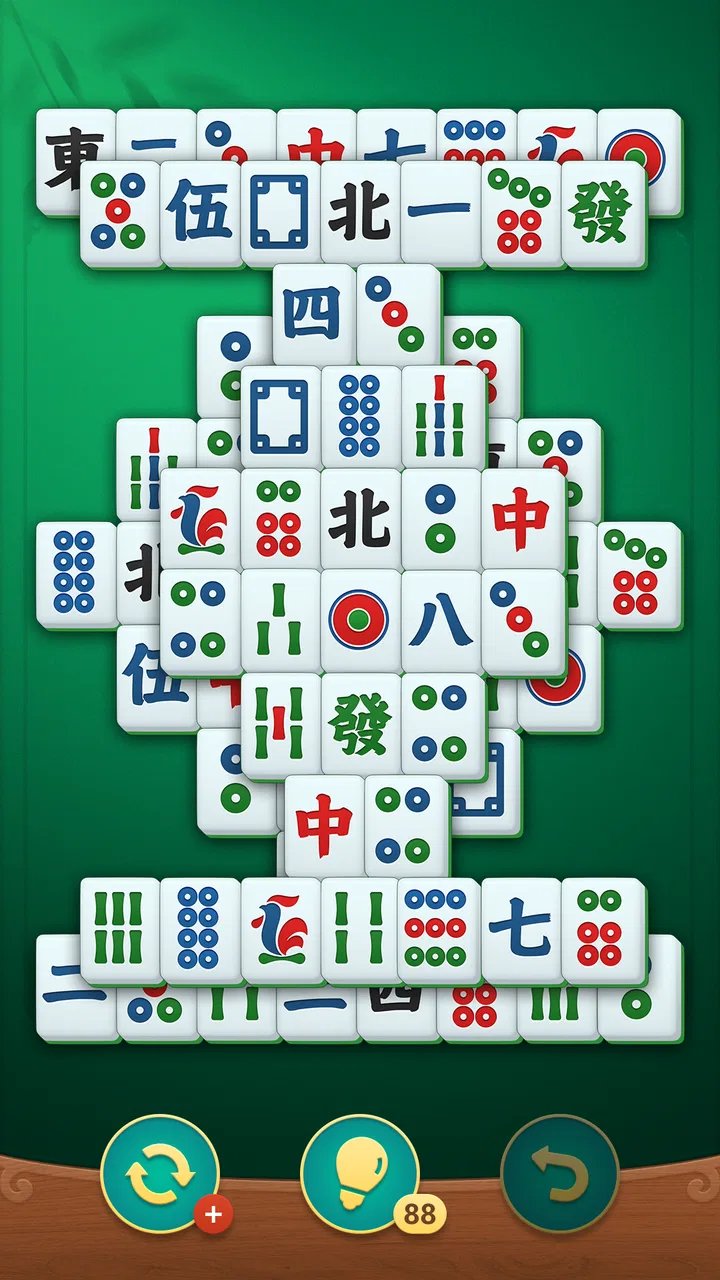
I installed Mahjong Solitaire Classic Game expecting a familiar tile-matching pastime, and that is exactly where its appeal begins. The game keeps the central idea easy to understand: look across a layered board, find two matching tiles that can be selected, remove them, and continue until the layout is cleared. There is no complicated story to learn or long tutorial to get through. I could start playing almost immediately, which makes it a natural choice when I want something calm for a short break.
What makes the experience worth discussing is not the basic rule alone, but the rhythm created around it. Every move asks me to scan the board, judge which pair is safe to remove, and think about what that choice may reveal next. A successful match gives immediate visual progress, while a poor sequence can leave the remaining tiles awkwardly arranged. That small tension keeps the game from becoming completely automatic.
Developed by Brainteaser Puzzle Game Studio, this free board game has built a strong audience, with an average rating of 4.9 from around 129 thousand ratings and more than a million installs. Those figures fit my impression of it as an approachable title rather than a niche puzzle experiment. It is aimed at Everyone, runs on Android 7.0 or later, and the current version is 1.6.2.
You May Also Like

 Blood Strike: 2.5 Anniversary
Blood Strike’s Loadouts Turn Every Drop Into a Tactical Gamble
A close look at Blood Strike’s custom loadouts: how fast access to signature weapons reshapes its battle royale rhythm, rewards preparation, and narrows the gap between fights.

 Pandora - Music & Podcasts
Pandora’s Music Is Easy to Start, but Harder to Recover
Pandora’s strength is its low-effort path from a seed to a station. Its weak spot is how much confidence it asks you to place in connection, setup, and quiet recovery.

 8 Ball Pool
 Is Built on Rivalries, Rematches, and Routine
A close look at the rivalries, rematches, shared routines, and unanswered safety questions that turn a quick pool match into a persistent mobile community.

 Samsung Music
’s Quiet Strength Is Playing What You Already Own
Its reach comes less from spectacle than from dependable access to a personal library. That simplicity is both the app’s strongest retention engine and its ceiling.

 AccuWeather: Weather Radar
AccuWeather Review: A Quick, Clear Forecast for Everyday Decisions
For everyday plans, the best forecast is the one you can understand quickly. AccuWeather makes rain timing, radar, and local conditions easy to act on, with a few trade-offs.

 Hill Climb Racing
Why Hill Climb Racing Still Turns Crashes Into One More Run
A tiny car, a bumpy hill and one more upgrade: Hill Climb Racing keeps resurfacing because its simple chaos makes every near-miss feel personal.
More From Our News Desk



How the matching loop feels in actual play
I focus here on what makes each choice feel meaningful: not simply spotting matching tiles, but noticing how a removal changes the options around it. I find that slowing down to compare a couple of possible pairs is more rewarding than clearing whatever stands out first. That distinction helps explain why the same simple action can feel either thoughtful or routine.
The first action is simple, but the board invites planning
My first useful habit was to avoid tapping the first matching pair I noticed. In Mahjong solitaire, a pair can be legal to remove while still being strategically inconvenient. I found it better to spend a moment reading the board from the outside inward, checking which tiles are blocking others and which exposed tiles may become useful later.
That makes the opening move more interesting than the store summary suggests. The action is only a pair of taps, yet the decision behind those taps can change the rest of the session. Removing a tile from a crowded upper layer may expose several possibilities, while clearing an isolated pair may produce a pleasant visual gain without improving the board very much.
I especially like using a three-pass scan. First, I look for immediately available pairs. Second, I check whether either tile is covering or restricting something important. Third, I choose the pair that gives me the most flexibility rather than simply the quickest removal. This is a small technique, but it reduces the feeling that I am playing by guesswork.
The game works well for people who want a board puzzle without a heavy learning curve. Someone unfamiliar with traditional mahjong can understand the matching format quickly because the objective is visible from the layout. At the same time, players who already enjoy tile puzzles can bring their own habits, such as preserving rare-looking options and clearing crowded areas first.
The feedback rhythm keeps a quiet game engaging
Each successful match produces a clear sense of cause and effect: I select the pair, the tiles leave the board, and the remaining arrangement becomes easier to read. That steady reduction is the main feedback rhythm. It is quieter than the constant effects found in arcade games, but it gives me enough confirmation to keep going.
The most satisfying moments are not always the largest-looking clears. Often, the better reward is uncovering a tile that creates two or three new possibilities. A move can feel modest at first and then improve the entire board a few seconds later. That delayed benefit gives the puzzle a useful layer of thought without turning it into a demanding strategy game.
I also noticed that the game encourages a different pace from many mobile titles. There is no need to rush through a board simply because the phone is in my hand. I can pause mentally between moves, compare alternatives, and return to the same visual search. For a commuter waiting between errands or someone winding down before bed, that slower pace is one of its strongest qualities.
Still, the calm presentation will not satisfy everyone. If I want dramatic difficulty spikes, competitive rankings, character progression, or a constant stream of new mechanics, this is not the right kind of board game. Its pleasure comes from repetition refined by attention, not from surprise or spectacle.
Small decisions create the reward
The reward structure is mainly internal: an increasingly open board, fewer remaining pairs, and the feeling that a messy layout is becoming manageable. I found that more meaningful than simply tapping through obvious matches. When I make a good choice early, the later board feels like the result of my planning rather than a sequence of random taps.
A useful approach is to treat exposed tiles as resources. If two matching tiles are both easy to reach, I do not automatically remove them. I first ask whether one of them is helping keep another route open. This matters most when several matching options are visible and the board has uneven layers. Saving one option can prevent a dead-looking finish later.
Another practical tip is to look for pairs that reduce visual clutter. A pair near the edge may not reveal much, but clearing it can make the central structure easier to inspect. Conversely, removing a central tile too early may expose more choices while also making the board harder to read. I prefer the move that improves both access and visibility.
This is where the game feels more thoughtful than an ordinary matching toy. The reward is not just that two images disappear. It is the gradual conversion of uncertainty into a clear route. I often begin by seeing too many possible pairs and end with a small, understandable set of decisions.
Why I start another session after finishing or stopping
The reset is part of the appeal. A completed board gives me a clean endpoint, while an interrupted session leaves me with the simple question of whether I can make better choices next time. Because the rules are already familiar, restarting does not demand much mental preparation. I can return after a few minutes and immediately understand what kind of attention the game needs.
That makes it suitable for short sessions, but it also creates the main risk: the loop can become repetitive. The same basic process of scanning, pairing, clearing, and reassessing is repeated from one board to the next. Players who need a strong sense of long-term advancement may eventually find the reset less motivating than a campaign-based puzzle game.
I would describe the replay value as reflective rather than collectible. I come back because I enjoy the act of solving another arrangement, not because I am chasing a complicated account, narrative, or inventory. That distinction is important when deciding whether it belongs on your phone.
For an everyday example, I used the game during a short afternoon break when I did not want to begin a larger activity. One board gave me enough concentration to step away from other tasks without requiring a long commitment. When I had to stop, the game was easy to put down; when I returned later, the matching rule came back instantly.
Where the free model fits into the experience
The game is free to download, with in-app purchases priced at $7.99 per item. That means the basic appeal is accessible without asking me to pay before I understand whether the tile layouts suit me. I would recommend trying the free experience first and deciding afterward whether any optional purchase feels worthwhile for your own habits.
The important trade-off is psychological rather than mathematical. A free puzzle game is easy to keep available for occasional use, but any optional purchase should be judged against how often you actually return. If you only play once every few weeks, paying for extras may not add much value. If this becomes your regular evening puzzle, the decision depends on what those purchases provide and whether they improve your personal routine.
I also appreciate that the age rating is Everyone. The rules are nonviolent and easy to explain, so it can work as a casual family-friendly puzzle. I would still treat it primarily as a quiet solo game, because the core loop is built around personal observation rather than direct interaction with another player.
Comparison with other board and matching games
Compared with a traditional physical mahjong set, this version removes the setup time and table space. I do not need to arrange tiles, check whether a pair is accessible by hand, or pack everything away afterward. The trade-off is that the tactile pleasure of handling real pieces is gone. People who love the weight and sound of physical tiles may prefer a tabletop set.
Compared with match-three games, the experience is less frantic and less dependent on chain reactions. Match-three titles often reward speed and cascading effects, while this game rewards careful visibility and access. I choose this one when I want my attention to settle rather than when I want a burst of stimulation.
Compared with more elaborate digital board games, it is much easier to enter but offers less variety in the surrounding structure. There is no need to learn a large ruleset, which is a benefit for casual players. On the other hand, anyone looking for deep progression, competitive play, or a story-driven reason to continue should consider a different category.
Who should play it, and who should skip it
I would recommend it to someone who enjoys visual sorting, quiet concentration, and puzzles that can be understood in seconds but played thoughtfully. It is particularly fitting for short breaks, relaxed evening sessions, or anyone who wants a phone game that does not demand constant speed.
I would be more cautious about recommending it to players who become frustrated by repeated board-clearing tasks. If you need a clear campaign, frequent unlocks, or increasingly dramatic mechanics, the simple loop may feel too narrow. It is also not my first choice when I want social competition or a strong sense of achievement beyond completing the current layout.
For accessibility of attention, the straightforward objective is helpful, but the visual scanning can still become tiring during longer sessions. I get better results by playing in brief rounds rather than trying to force a marathon. Taking a pause also makes it easier to notice pairs that I overlooked when I was staring at the same arrangement for too long.
My verdict on the action-feedback-reward-reset loop
The loop is well defined: I inspect the board, select a matching pair, receive immediate confirmation, gain a clearer layout, and then decide whether to continue or begin again. The reward is the gradual disappearance of confusion. The reset works because the rules are light enough that another board never feels like a major commitment.
That simplicity is both the game’s strength and its boundary. Mahjong Solitaire Classic Game is best when you want a focused, low-pressure tile puzzle, not a full entertainment system. I like it as a dependable break-time game because it gives my mind one contained problem and lets me stop naturally when the board is done.
The large audience and strong 4.9 average make sense to me after using it. The title delivers a familiar board format in a convenient mobile form, and its free entry point makes experimentation easy. Just keep your expectations aligned: this is a polished casual matching routine, not a broad strategy adventure.
If you enjoy finding order in a crowded layout, I think it is worth installing. My advice is to slow down during the first few moves, protect useful options, and judge the game by whether its quiet repetition relaxes you. For me, that is where the lasting value lies: not in a dramatic finale, but in the small satisfaction of turning one difficult-looking board into a clean reset.
FAQs for Mahjong Solitaire Classic Game
01What are the main features of Mahjong Solitaire Classic Game?
Mahjong Solitaire Classic Game offers a traditional tile-matching experience with hundreds of puzzles to solve. The game features crisp graphics, intuitive controls, and a variety of themes and backgrounds to enhance gameplay. With regular updates and challenging levels, it's perfect for both beginners and seasoned players looking to test their skills.
02Is Mahjong Solitaire Classic Game free to play?
Yes, Mahjong Solitaire Classic Game is free to download and play. However, it offers in-app purchases for additional features, themes, and to remove ads. While the free version provides a complete experience, these purchases can enhance gameplay and provide an ad-free environment for uninterrupted fun.
03Can I play Mahjong Solitaire Classic Game offline?
Absolutely! Mahjong Solitaire Classic Game is designed to be enjoyed without an internet connection, making it ideal for playing on the go. Whether you're on a flight or in a remote location, you can dive into the tile-matching puzzles anytime without worrying about connectivity issues.
04What are the system requirements for Mahjong Solitaire Classic Game?
For Android users, the game requires Android 4.4 and up, ensuring compatibility with most devices. iOS users will need iOS 9.0 or later. It’s optimized for both phones and tablets, providing a seamless experience across devices with minimal resource usage and quick installation.
05Are there any age restrictions for Mahjong Solitaire Classic Game?
Mahjong Solitaire Classic Game is suitable for players of all ages. It features family-friendly content with no inappropriate themes, making it a great choice for children, adults, and seniors alike who enjoy engaging puzzle games that stimulate the mind and offer hours of entertainment.
Pros
- Intuitive controls for easy gameplay.
- Beautiful
- calming graphics enhance experience.
- Hundreds of challenging levels available.
- Offline mode supports play without internet.
- Regular updates with new puzzles and features.
Cons
- Ads can be intrusive during gameplay.
- Limited hints unless purchased.
- No multiplayer mode available.
- Some puzzles may feel repetitive.
- Occasional crashes on older devices.

Mahjong Solitaire Classic Game
Gallery